
Soon after the police came and they chased away the blacks and the whites laughed hysterically. I wondered then why they didn’t arrest any of us.
At an early age, my mother became mentally ill and had to be institutionalized. At 11 years old, I can still remember waiting in the car while my father visited her and hearing women screaming behind barred windows.
It is a sound I will never forget. I went to a mostly non-white school called ‘Boys High’ in the Bedford Stuyvesant section of Brooklyn. As a young, skinny white kid, survival became my greatest concern.
I learned street smarts and somehow got through this period of my life I later studied theater at The American Academy of Dramatic Arts and met a teacher there who taught mime, Paul Curtis. He invited me to study at his theater and I eventually became a member of his troupe.
During the early 1960’s, I worked as a performing artist with ‘The American Mime Theater.’ I performed on such shows as The Jackie Gleason Show and The Exploring Show with the great Buster Keaton. I also mimed my Rubberman routine at the 15th Street School with Alan Arkin and Orson Bean.
During the latter part of the 1960’s, I had the misfortune of developing a serious drug habit. I did my rehabilitation in a place called Synanon in California where some of the hardest criminals were probated.
I participated in some of the most confrontational groups you can imagine. Because of my intense anger, I began to dominate the groups.
All groups were led by ex-drug addicts who had resolved their addictions and were teaching others how to kick their habit, eventually I became one of the leaders of these groups myself.
After several years, I left Synanon and went back to New York and was hired by another drug rehab, a group called ‘Journey Alert.’ Here I ran more groups until I was recruited by Harvard University to develop a pilot program where I would train people how to run groups for drug addicts.
I gave many lectures to Harvard students doing their internship in psychiatry, social workers, clergy, law enforcement and, of course, the drug addicts themselves, mostly young kids.
After doing this for a while, I felt the need to move on. I still had creative interests. As a kid, always liked to draw, especially architectural renderings. During this period, I became exceedingly interested in the visual arts, especially painting.
While painting, I needed to support myself so I worked as a restaurant manager and bartender. I bartended at The Club El Morocco where I met and served Jacqueline Kennedy Onassis and the wonderful Ethel Kennedy as well as the infamous Imelda Marcos.
But it was not until I became the restaurant manager of the Phebes Bar Restaurant on West 4th Street and the Bowery that I began to meet famous artists like Andy Warhol, Ellsworth Kelly and many others.
This is where I began to discuss my mission in making the specific art that I painted. As I developed my art, my concerns were not only about art history but about art defining life situations while still adhering to the art history of my time.
I was never a fan of Abstract Expressionism, Color Field painting nor Minimalism or pure Conceptualism (a la Marcel Duchamp).
Pop Art did not affect me except for the great painters, Jasper Johns (who was very complimentary of my work), Roy Lichtenstein and James Rosenquist.
My serious paintings began in the late 1970’s. I was inspired by my childhood pet dog, Lucky, putting him in mostly urban environments with strong sunlight and casting a deep shadow.
Also about this time, I began playing baseball in the highly talented Big Apple League and became its most valuable player. This is where I met the great baseball player and artist Neil Jenney (he could hit a baseball about as far as it could be hit, but not far enough that I couldn’t catch it). A formidable relationship began because of our love for both art and sports. As my art progressed, he became my greatest supporter.
As my art further evolved, it began to express art concerns that I could not ignore, I began to question the whole premise of Modern Art (‘Art for the sake of Art’) or that art should challenge itself (Jackson Pollock’s Abstract Expressions to Andy Warhol’s Pop Art) and all of its followers.
This has been a pattern of Modernism, a different art style every 5-10 years or as the late, great art dealer Richard Bellamy once commented to me, ‘Whatever fad is in at the time.’ In my opinion, so called ‘Modernism’ began its of decline with the advent of ‘appropriation’ better known as plagiarism, stealing other people’s ideas and images and making them your own.
I mentioned that my work not only had to do with invention but with a narrative with both social and political issues that concerned me. My paintings of benches and flags satisfied those topics.
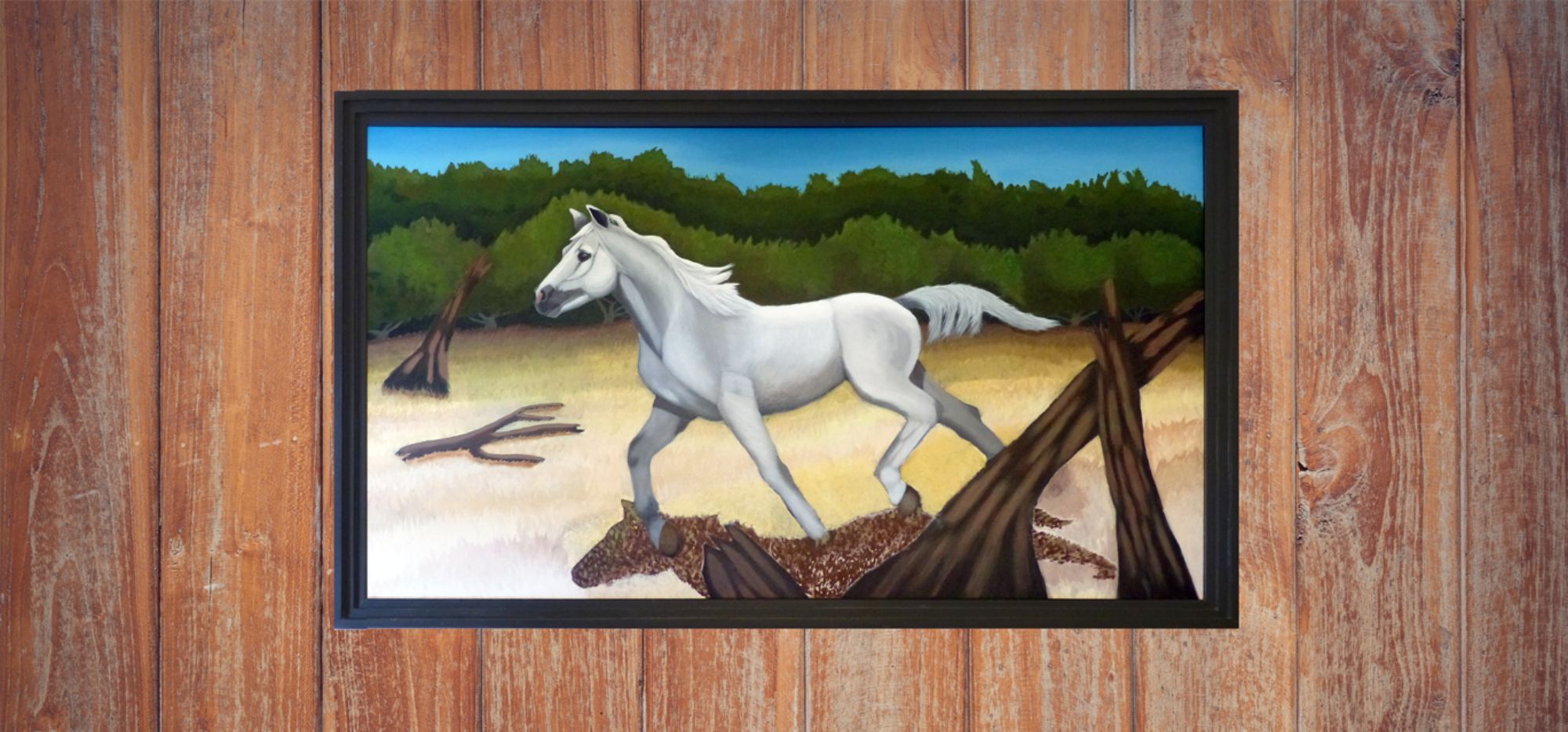
My work evolved and so did my imagery with strong concerns for the environment and the psychological imbalances of human life using strong metaphors of landscape and portraiture.
Unfortunately, my painting began to curtail around 2006 when I developed a serious neurological condition called essential tremors. I also have a slow growing brain tumor, but brain surgery is not an option because of my age and other health issues.
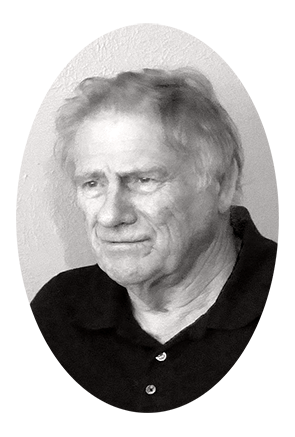
In conclusion, my life has always been about art. I am a self-taught artist and, although some people might consider me an outsider from the mainstream of art, I believe just the opposite; that I am the mainstream, breaking from the chronological order of Modernism. Some of the paintings I am showing here have been in one-man and group shows while some have never been seen publicly before.